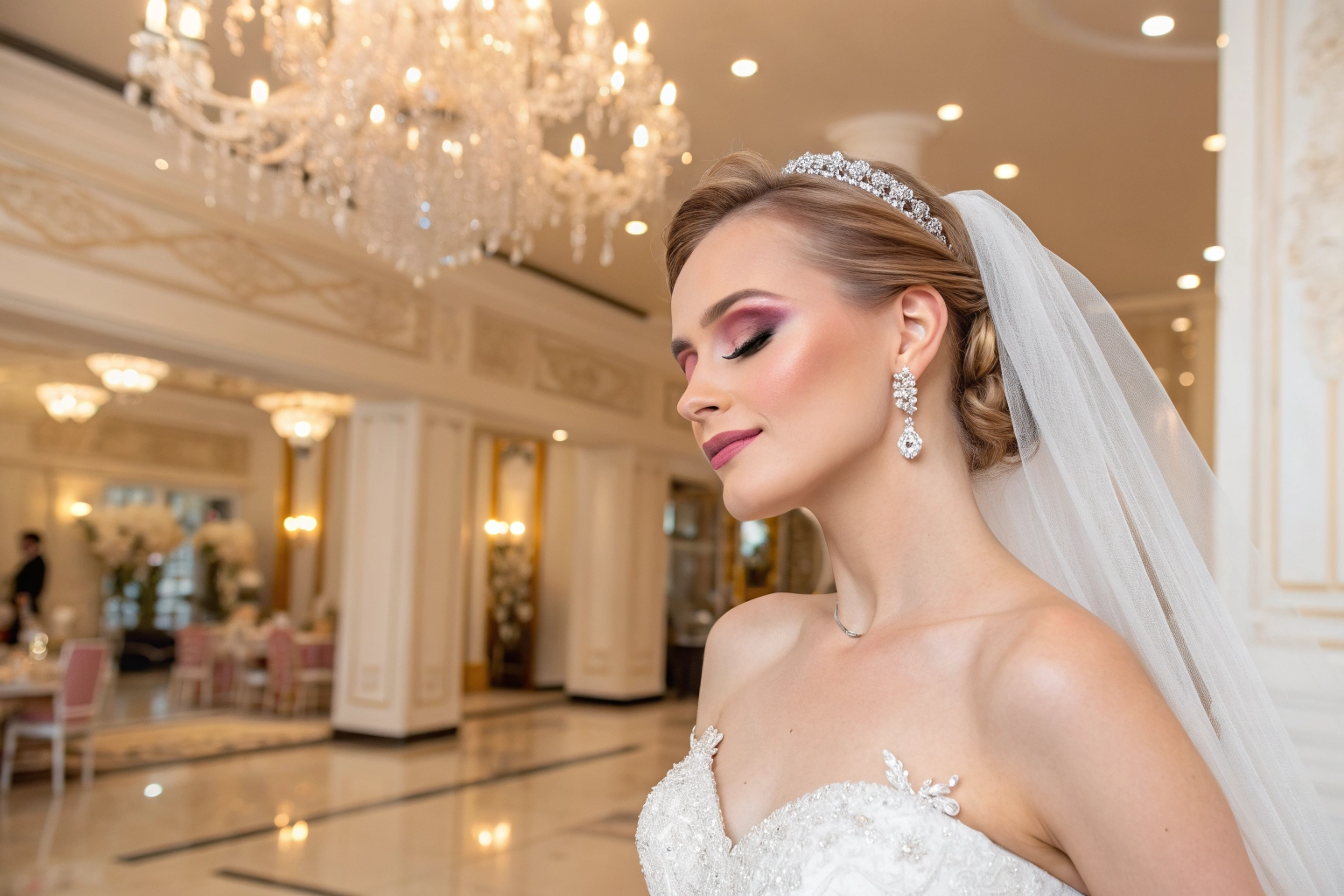

Bridal Makeup: How to Choose a Look That Feels Like You
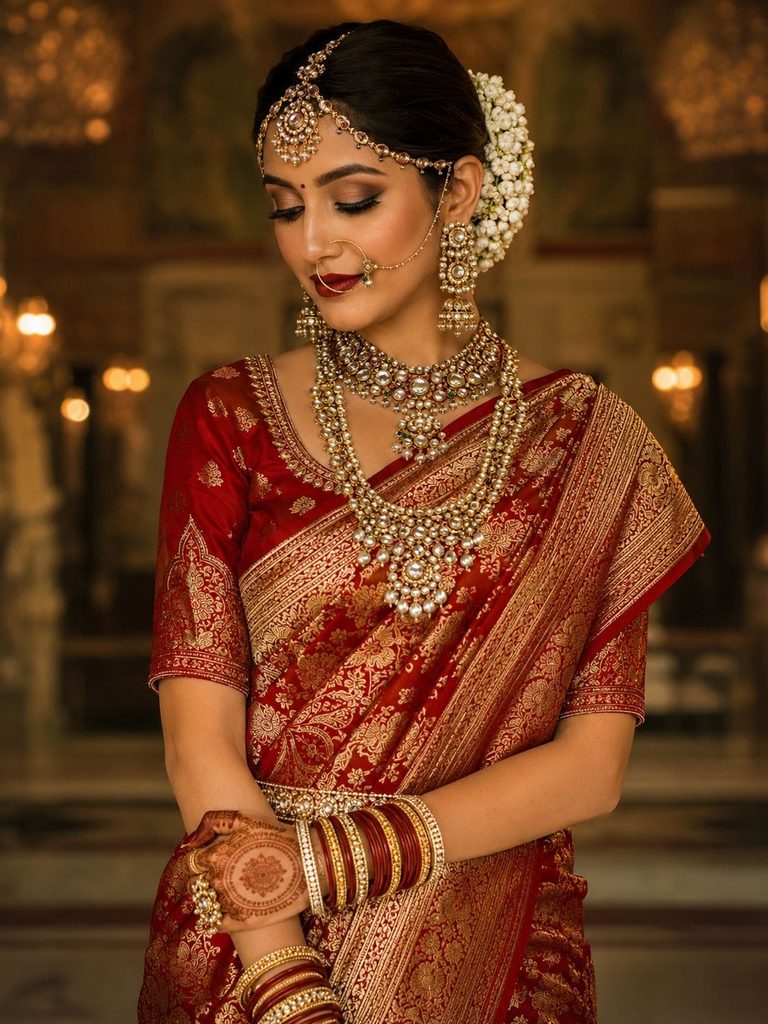
You’ve saved 37 bridal makeup photos.
One has glowing skin. Another has dramatic eyes. One has soft pink lips. Another has a deep, defined lip that looks incredible with the bride’s outfit.
Now you’re staring at all of them thinking:
“Which one am I actually supposed to choose?”
Here’s the answer I would start with:
Don’t choose a bridal makeup look because it looks beautiful on someone else. Choose the features of those looks that make you feel most like yourself, then let your makeup artist adapt them to your face, skin, outfit and wedding setting.
That’s the difference between copying a makeup look and creating your bridal look.
Start With One Question: How Do You Want to Feel?
Before talking about foundation, lashes or lipstick, ask yourself:
When I look in the mirror on my wedding day, how do I want to feel?
Maybe your answer is:
- “I want to look fresh and natural.”
- “I want to feel glamorous.”
- “I want my eyes to stand out.”
- “I want glowing skin but not heavy makeup.”
- “I normally don’t wear much makeup, so I don’t want to feel covered.”
- “I love makeup and want my bridal look to feel special.”
There isn’t one correct answer.
Your everyday makeup habits are useful here. If you normally wear very little makeup, an extremely dramatic transformation may feel uncomfortable even if it looks beautiful in photographs.
On the other hand, if you’re someone who already enjoys defined eyes, sculpting and lipstick, an ultra-minimal look may leave you feeling underdone.
A bridal makeup look should feel like you, with the volume turned up appropriately for the occasion.
Natural, Soft Glam or Full Glam: Which One Is Actually You?
This is where many brides get stuck.
The labels sound straightforward, but “natural” can mean different things to different people.
Natural bridal makeup
This usually means the makeup is designed to look relatively skin-like, with subtle definition rather than an obviously dramatic finish.
It doesn’t necessarily mean wearing almost no makeup.
Soft glam bridal makeup
This sits somewhere in the middle.
You can have polished skin, defined eyes, lashes, blush and a more noticeable lip while keeping the overall result balanced.
Full glam bridal makeup
This generally involves stronger definition — more pronounced eyes, contouring, lashes, coverage or colour.
None of these automatically makes a better bridal look.
The useful question is:
Which level of definition feels comfortable on my face?
And if you’re genuinely torn, your makeup trial is the perfect place to compare variations rather than trying to decide entirely from photographs.
Don’t Copy the Face in the Reference Photo
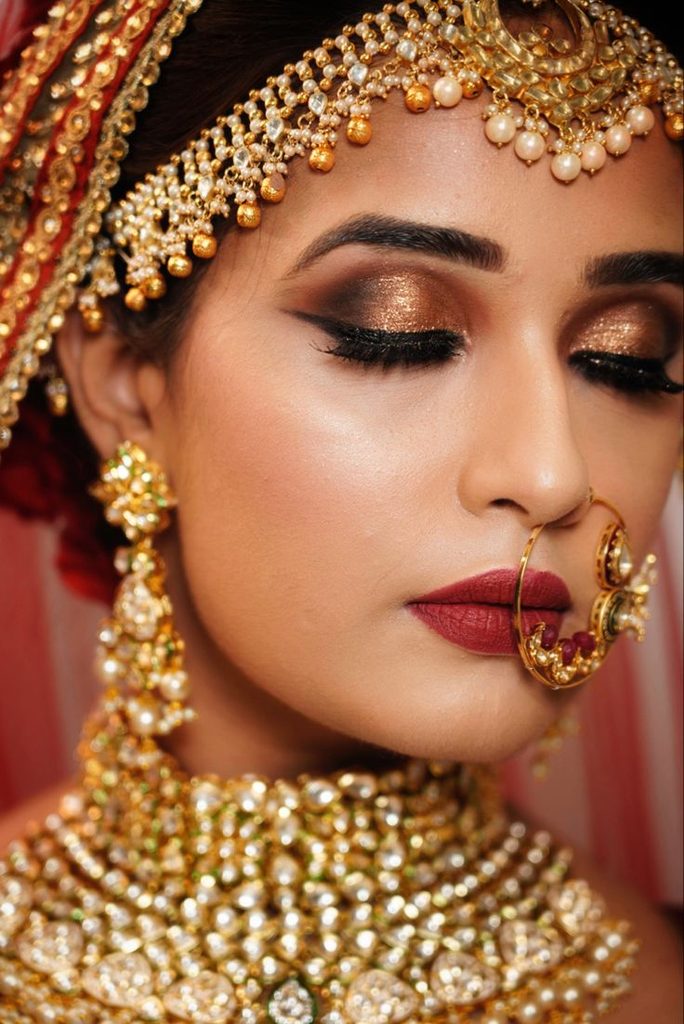
This is one of the most important things to understand before your bridal makeup trial.
Suppose you’ve saved a photo of a bride with:
- bronze eyeshadow
- very sharp contour
- pink blush
- glossy lips
- glowing skin
You don’t necessarily need those exact techniques in exactly those placements.
Instead, show your artist the picture and explain what you like about it.
For example:
“I like the soft eyes and glowing skin, but I don’t want such strong contour.”
That’s much more useful than simply saying:
“I want this exact makeup.”
Your artist can then translate the elements you like to suit your features and preferences.
Reference photos are most useful as communication tools, not templates.
How Should Your Outfit and Jewellery Influence Your Makeup?
Your makeup doesn’t exist separately from the rest of your bridal look.
Think about the complete picture:
Outfit + jewellery + hairstyle + makeup + venue + lighting
A heavily embellished outfit may work beautifully with defined makeup, while a simpler outfit might pair well with softer beauty choices.
That doesn’t mean there are strict rules.
It simply means the elements should feel like they belong together.
For example, if you’re wearing bold jewellery and a detailed bridal outfit, you might choose a more balanced eye and lip rather than trying to make every feature equally dramatic.
Or perhaps you want a strong eye because that’s part of your personal style.
That’s completely reasonable.
The point is to make the choice deliberately.
What About Your Skin Tone and Undertone?
Foundation should look like your skin, not like a lighter version of it.
This sounds obvious, but bridal makeup photographs can make shade matching particularly important.
During your consultation or trial, discuss:
- Your foundation shade
- Your undertone
- The desired skin finish
- Concealer placement
- Blush tones
- Lip colours
- Eyeshadow shades
Indian complexions can span a wide range of warm, neutral, olive and deeper undertones, so simply choosing a shade based on whether your skin looks “fair,” “medium” or “deep” isn’t enough for precise matching.
This is another reason to use the trial to test the actual makeup on your skin rather than deciding entirely from an online photograph.
What Should You Consider About Your Wedding Day?
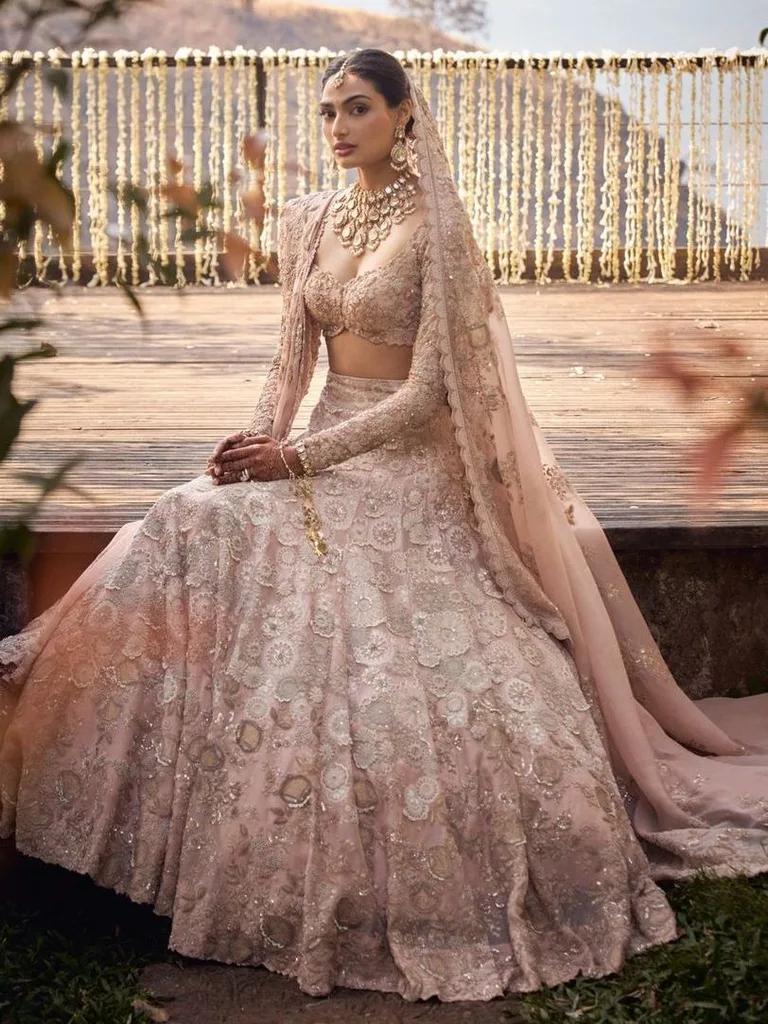
Your makeup needs to work in the environment where you’ll actually wear it.
Ask yourself:
Is the wedding during the day or evening?
Daylight can reveal different details from indoor or evening lighting.
Will you be outdoors?
Heat, humidity and movement may affect how comfortable and long-lasting your makeup feels.
How long will you be wearing it?
A bridal look may need to stay comfortable through the ceremony, photographs, greetings and celebrations.
Will you be crying?
Probably.
So don’t be shy about asking your makeup artist how they approach eye makeup and touch-ups for an emotional wedding day.
A good bridal consultation should consider the wedding itself rather than treating makeup as an isolated beauty appointment.
What Should You Bring to Your Bridal Makeup Trial?
Don’t arrive with one blurry screenshot and say, “Something like this.”
Give your makeup artist something to work with.
Bring or save:
3–5 reference photos
Choose photos where you genuinely like the makeup rather than simply liking the bride’s overall appearance.
Your outfit details
A photo, fabric sample or the actual outfit can help.
Your jewellery
If possible, bring it or show clear photographs.
Your hairstyle reference
Your makeup and hairstyle should work together.
Photos of looks you don’t like
This can be surprisingly helpful.
For example:
“I like glowing skin, but I don’t want a very glossy finish.”
“I want defined eyes, but I don’t want a very thick eyeliner.”
Knowing what you don’t want can be just as useful as knowing what you do.
What Should You Actually Test During the Trial?
Don’t just look in the mirror for two minutes and decide whether you like it.
Use the trial to answer practical questions.
Does the base look like your skin?
Check it in natural light if possible.
Do you still recognise yourself?
You should be able to see you underneath the makeup.
Are the eyes too dramatic?
If you’re uncomfortable, say so.
Is the lip colour something you’d actually wear?
A beautiful shade isn’t useful if you spend the entire ceremony wishing you had chosen something else.
Are the lashes comfortable?
Small details can become very noticeable after several hours.
How does the makeup photograph?
Take photos in different lighting where practical. Bridal professionals commonly recommend using the trial to evaluate how the look translates beyond the salon mirror.
What Mistakes Should You Avoid?
Choosing a look only because it’s trending
Trends come and go.
Your wedding photographs will stay with you much longer.
If you love a trend, use it. But don’t choose it simply because you’ve seen it everywhere.
Saying “natural” without explaining what you mean
For one bride, natural means tinted moisturiser and soft blush.
For another, it means full coverage with neutral eyes and subtle contour.
Instead of saying only “I want natural makeup,” describe what you mean.
“I want my skin to look even and fresh, but I don’t want heavy contour.”
That’s much clearer.
Being afraid to give feedback
Your trial is exactly the time to say:
“Can we make the eyes softer?”
or
“I’d prefer a warmer lip.”
Clear feedback helps your artist refine the look before the wedding day.
Trying to look completely different
There’s a difference between looking elevated and looking unfamiliar.
If you rarely wear heavy makeup, suddenly choosing a very intense look can feel strange even if technically executed well.
Your comfort matters.
What If I Want Different Looks for Different Functions?
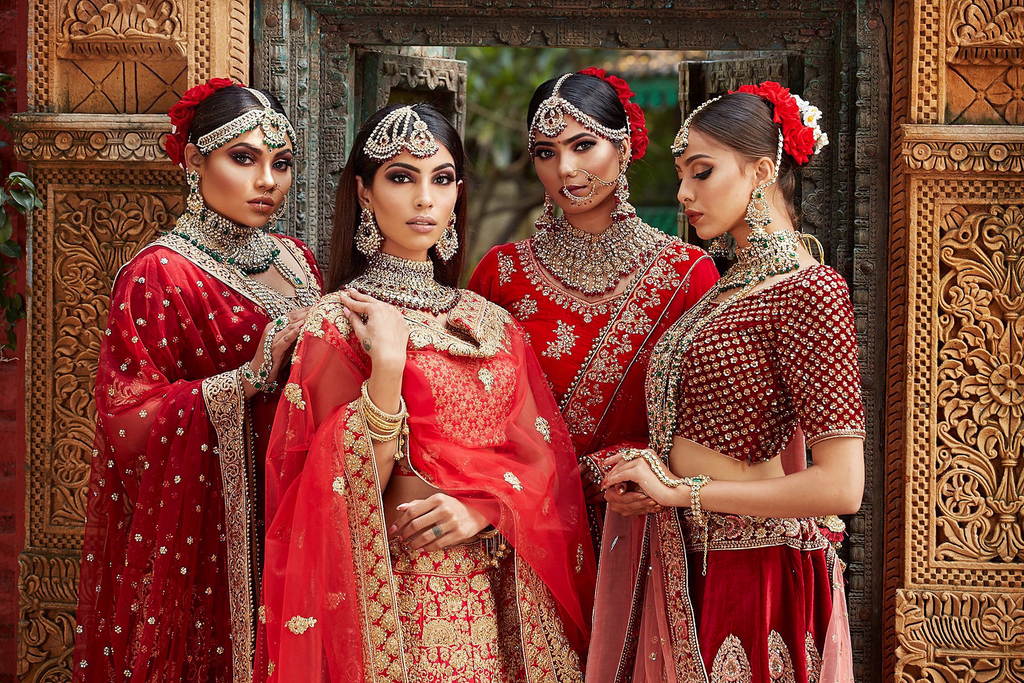
You don’t necessarily have to create one makeup look for every wedding event.
A daytime ceremony, mehendi, reception or evening celebration may have a different mood, outfit and setting.
You might choose:
Day function: softer eyes and fresh skin
Evening reception: more defined eyes and a stronger lip
Another celebration: a playful colour inspired by the outfit
The key is to keep the looks connected to your overall style rather than making every event feel like a completely different person.
7 Questions to Ask Your Bridal Makeup Artist
Before finalising your look, ask:
- What would you recommend based on my features and the look I normally wear?
- How will this makeup work with my outfit and jewellery?
- How will the finish look in daylight and photographs?
- What should I do before the makeup appointment?
- How long should I allow for getting ready?
- What touch-ups might I need during the event?
- Can we adjust anything I don’t feel comfortable with during the trial?
These questions turn the appointment into a proper consultation rather than simply showing up and hoping you like the result.
Frequently Asked Questions About Bridal Makeup
Should bridal makeup look natural or glamorous?
It depends on your personal style, outfit, event and comfort level. Natural, soft glam and full glam can all work as bridal makeup. The more useful question is how much definition you personally feel comfortable wearing.
How important is a bridal makeup trial?
A trial gives you an opportunity to test the look before the wedding day, discuss changes and see how the makeup works with your features, outfit and preferences. It is also a chance to communicate clearly with your makeup artist.
How many bridal makeup reference photos should I save?
You don’t need hundreds. A small collection of clear images that consistently show what you like is more useful than a huge folder of completely different looks.
Should my bridal makeup match my outfit?
It doesn’t need to literally match it, but the makeup should work harmoniously with your outfit, jewellery and overall styling.
What if I don’t know what bridal makeup style suits me?
That’s exactly what a consultation is for. Tell your makeup artist what you normally wear, what you like and dislike, and how you want to feel on the day. If you’re unsure between two styles, discuss both during your trial.
Can I ask my makeup artist to change something during the trial?
Yes. In fact, specific feedback is useful. Instead of saying “I don’t like it,” try explaining what feels wrong — perhaps the lip is too bright, the eyes feel too heavy, or the skin finish is more matte than you expected.
The Right Bridal Makeup Look Is the One You Can Live In
You don’t need to find the perfect bridal makeup photo.
You need to figure out what you like about the photos you’ve saved.
Maybe it’s luminous skin.
Maybe it’s softly defined eyes.
Maybe it’s a particular lip colour.
Maybe it’s simply the fact that the bride still looks unmistakably like herself.
Take those preferences to your makeup artist and let the final look be built around you — your features, your comfort, your outfit and your wedding day.
Because when you look back at your photographs years from now, the goal isn’t to remember which makeup trend you followed.
It’s to look at yourself and think:
“Yes. That looked like me.”